
Home / Services / Mahamrityunjaya Jaap
Mahamrityunjaya Jaap in Trimbakeshwar
Perform your Mahamrityunjaya Jaap done at the holy Trimbakeshwar Jyotirlinga by a Pandit who has more than 20 years of experience and has performed more than 15,000 Pujas with full devotion as per the traditional Vedic method
When the Words You Need Are Older Than Any Prayer You Know
People visit Trimbakeshwar for various reasons. Some come seeking strength during illness or to pray for a loved one’s recovery, while others perform the Mahamrityunjaya Japa based on astrological advice. Many people come here just to worship Lord Shiva with reverence and devotion.
Trimbakeshwar, one of the twelve sacred Jyotirlingas of India, is considered one of the most auspicious places to perform Mahamrityunjaya Japa. This powerful Vedic ritual is dedicated to Lord Shiva and is traditionally performed to seek blessings for health, protection, long life, and peace of mind.
Mahamrityunjaya Japa is more than just a simple prayer. It should be performed with the correct pronunciation of mantras, pure sankalpa (intention), and in accordance with authentic Vedic traditions. For this reason, devotees often engage an experienced Vedic pandit to conduct the ritual.
Pandit Ramayan Shastri conducts the Mahamrityunjaya Japa at the sacred Trimbakeshwar Jyotirlinga following traditional Vedic methods. including chanting of the entire mantras, the prescribed puja-vidhi, and, where necessary, Mahamrityunjaya havan so that devotees can offer their prayers with full devotion and as per the rules of the scriptures.
What is Mahamrityunjaya Jaap?
The word “japa” means the reverential, focused chanting of a sacred mantra, not just repetition, but as a sincere offering to the divine.
Mahamrityunjaya Japa is the ritual chanting of the Tryambakam Mantra, one of the oldest and most revered hymns from the Rigveda, dedicated to Lord Shiva in his form as the conqueror of death.
This mantra is a prayer for liberation not just from death but from fear, disease, suffering, and everything that binds us.
But this is not just chanting. The Mahamrityunjaya Japa is a complete Vedic ritual. It begins with a sankalpa, a formal sacred vow in which you state your intention, your name, your gotra, and the purpose of the ritual before the divine. This sankalpa transforms an act of chanting into a true yajna, an offering with spiritual force.
What is Mahamrityunjaya Jaap?
The word “japa” means the reverential, focused chanting of a sacred mantra, not just repetition, but as a sincere offering to the divine.
Mahamrityunjaya Japa is the ritual chanting of the Tryambakam Mantra, one of the oldest and most revered hymns from the Rigveda, dedicated to Lord Shiva in his form as the conqueror of death.
This mantra is a prayer for liberation not just from death but from fear, disease, suffering, and everything that binds us.
But this is not just chanting. The Mahamrityunjaya Japa is a complete Vedic ritual. It begins with a sankalpa, a formal sacred vow in which you state your intention, your name, your gotra, and the purpose of the ritual before the divine. This sankalpa transforms an act of chanting into a true yajna, an offering with spiritual force.
Meaning of the Mahamrityunjaya Mantra Word by Word
This is the mantra from the Rigveda (7.59.12) exactly as it has been recited for thousands of years:
ॐ त्र्यम्बकं यजामहे सुगन्धिं पुष्टिवर्धनम्।
उर्वारुकमिव बन्धनान् मृत्योर्मुक्षीय माऽमृतात्॥
Om Tryambakam Yajamahe Sugandhim Pushtivardhanam
Urvaarukamiva Bandhanan Mrityor Mukshiya Maamritat
The mantra is not a desperate appeal. Read word by word, it is a composed, precise, and deeply beautiful petition asking for a natural release from suffering, not a forced escape from destiny.
ॐ (Om)
The word “OM” denotes almighty divinity
त्र्यम्बकम् (Tryambakam)
Three-eyed (supreme deity – Lord Trimbakeshwar)
यजामहे (Yajamahe)
Word mean We adore.
सुगन्धिम् (Sugandhim)
Sweet or pleasant fragrance
पुष्टिवर्धनम् (Pushtivardhanam)
उर्वारुकमिव (Urvaarukamiva)
Obstacles and diseases resulting from this, like Urvaru.
बन्धनात् (Bandhanan)
Harmful and unhealthy attachment.
मृत्योर् (Mrityor)
From death the word “mrityu” (death) is present here, and the prayer asks for liberation from its grip.
मुक्षीय (Mukshiya)
Free us, release us, and liberate (moksha) us not by escaping what is inevitable but by transcending the fear of it.
माऽमृतात् (Maamritat)
“Ma” means “may we not lose,” and “Amrita” means “the nectar of immortality.” Grant us the nectar of eternal life and spiritual liberation.
The complete meaning: “We worship and honor the three-eyed Lord Shiva, who is aromatic and who nourishes and sustains all beings. As a ripe cucumber is freed naturally from the vine that holds it, may you free us from the bondage of death and grant us the nectar of immortality.”
Benefits of Mahamrityunjaya Jaap
In Vedic and Hindu traditions, the Mahamrityunjaya Mantra has been chanted for these very purposes for thousands of years. We are presenting these as genuine traditional beliefs, not as a guarantee of definite results.
Health and Recovery
This mantra is traditionally associated with healing or curing diseases, especially serious illnesses and long-standing health problems.
Longevity (lambi umr)
Prayers were offered specifically for a long and healthy life, particularly for the elderly or those with health issues.
Protection from Untimely Death
The primary purpose of this mantra is to attain liberation from untimely death and the fear associated with it.
Peace of Mind
It is believed that the continuous chanting of mantras soothes deep restlessness and brings clarity to a troubled mind.
Spiritual Liberation (Mukti)
At its deepest level, the mantra is a prayer for moksha, freedom from the cycle of birth and death.
Why Trimbakeshwar is the Most Sacred Place for Mahamrityunjaya Jaap
A Jyotirlinga is not merely a temple dedicated to Shiva. These twelve Jyotirlingas are places where Lord Shiva is believed to have appeared as a pillar of light (Jyoti means light, and Linga means symbol/form) and not been established by humans. The spiritual power derived from worshipping a Jyotirlinga is considered to be of a distinct and far greater magnitude than that of even the most revered traditional temples.
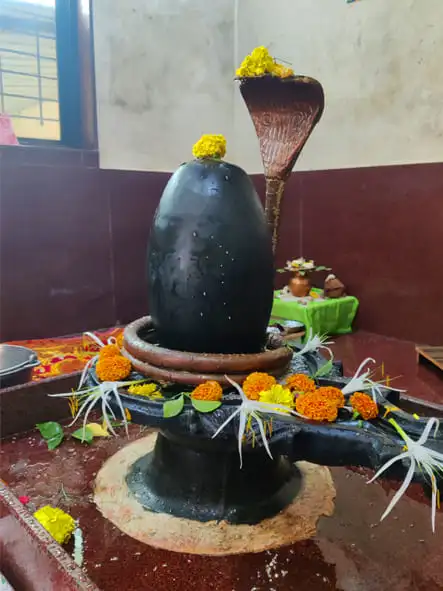
Trimbakeshwar is the only Jyotirlinga in India where the Shivalinga bears three faces representing Brahma (creation), Vishnu (preservation), and Shiva (transformation and liberation). This Trimurti (Trinity) form is considered to be uniquely linked to the Mahamrityunjaya Mantra; The mantra addresses all three aspects: healing the body (Brahma’s creation), sustaining life (Vishnu’s preservation), and ultimately liberating the soul (Shiva’s grace).
Brahma Purana Designation
Ancient scriptures specifically identify Trimbakeshwar as the place where the Mahamrityunjaya Mantra operates with its full power.
Godavari's Sacred Origin
The Godavari River originates at Trimbakeshwar. Bathing and performing worship in these sacred waters further enhances the spiritual impact of Japa (chanting).
Tri-Mukha Jyotirlinga
The unique three-faced Shivalinga here symbolizes Brahma, Vishnu and Shiva, the perfect trinity of the universe, which is in keeping with the healing power of the mantra
Best Time (Muhurat) for Mahamrityunjaya Jaap
Mahamrityunjaya Jaap can be performed throughout the year. The following times are considered particularly auspicious for this specific mantra and ritual:
Mondays (Somvar)
Mahashivratri
Shravan Month
Pradosh Kaal
Brahma Muhurta
Amavasya
Monday is the day dedicated to Lord Shiva, and Shravan (the monsoon month, typically July–August) is His holy month. Performing the Maha Mrityunjaya Japa on a Monday during Shravan is considered one of the most powerful remedies. However, for specific requirements, any day with an auspicious Muhurat (timing) according to the Panchang is perfectly suitable. You may contact Pandit Ramayan Shastri Guruji with your preferred dates, and he will select the most auspicious time available.
Step-by-Step Mahamrityunjaya Jaap Process
The entire ritual is performed according to the traditional Vedic sequence. Depending on the chosen number of jaap, the chanting of mantras constitutes the core part of this ritual:
Sankalpa
The puja begins with a formal Sankalpa, where you state your name, gotra (lineage), and purpose in the presence of the divine. This anchors the ritual to you specifically.
Ritual Purification
Before the rituals begin, devotees bathe in the holy Godavari River and wear clean clothes. The place of worship is sanctified with Gangajal (holy water from the Ganges).
Ganesh Puja
Lord Ganesha is invoked to remove all obstacles in the puja and ensure its completion without any issues.
Kalash Sthapana and Shiva Invocation
The sacred Kalash isPlaced. Lord Trimbakeshwar is formally invoked through specific mantras and offered Panchamrit, bilva leaves, and sacred water.
Mahamrityunjaya Mantra Jaap
Core Procedure: Mantras are chanted a specific number of times on a Rudraksha mala with complete focus and a steady rhythm. The number of Pandits chanting simultaneously is determined based on the chosen number of chants.
Mahamrityunjaya Havan
With each round of mantras, special offerings—such as Bilva leaves, sesame seeds, barley, ghee, and sacred herbs are offered into the fire as oblations.
Rudra Abhishek (If Included)
The Shivalinga is bathed with Panchamrit, milk, honey, and Gangajal while Rudra mantras are chanted, a deeply purifying act often combined with Mahamrityunjaya Jaap.
Aarti, Prasad, and Guidance
The ceremony concludes with Shiva Aarti; distribution of prasad, including vibhuti (sacred ash) and Rudraksha; and Guruji’s personal guidance for ongoing Shiva devotion.
Duration
1 – 7 Days
Samagri
Fully Included
Location
Trimbakeshwar Jyotirlinga
How Many Mantras Are Chanted? Understanding the Jaap Counts
One of the most frequently asked questions by devotees is how many times a mantra should be chanted. Vedic tradition prescribes specific counts for chanting, each with its own spiritual significance and associated religious procedure. Here is a clear guide:
| Jaap Count | Also Called | Approx. Duration | When It's Appropriate |
|---|---|---|---|
| 108 | Ek Mala | 20–30 minutes | Personal daily practice, brief temple visit, or when time is limited. One complete mala of the Mahamrityunjaya Mantra. |
| 1,100 | Ek Hajaar Ek Sau | 2–3 hours | A more substantial ceremony for specific health concerns or personal vows. Can be completed in a single morning session. |
| 11,000 | Ekadash Sahasra | 8–10 hours | A full-day ceremony suitable for serious illness, protection during a difficult astrological period, or family-wide blessing. Most commonly performed by a team of pandits. |
| 21,000 | Ekavishat Sahasra | 1.5–2 days | Deeper ceremony for long-term illness, life-threatening conditions, or significant karmic or planetary issues. Requires multiple pandits chanting in shifts. |
| 1,25,000 | Savaa Lakh / Purashcharan | 5–7 days | The most complete and powerful form — typically performed when the situation is most serious, as a major vow, or as a full spiritual Purashcharan. Requires several experienced pandits. |
Why Devotees Choose Pandit Ramayan Shastri for Mahamrityunjaya Jaap
Many pandits in Trimbakeshwar perform this puja. What separates us is not just experience, but our sense of responsibility. We view every devotee as an individual seeking genuine spiritual guidance, rather than just a transaction in a booking process.
Correct Mantra Recitation
Pronunciation, rhythm, and counting hold great significance in Vedic chanting. Guruji’s pronunciation is according to the traditional Vedic vocal system.
Transparent Pricing
The full price is stated before confirmation. No hidden costs, no last-minute additions.
Pre-chanting consultation
Guruji discusses your situation before confirming the count and ritual scope, ensuring the ceremony is genuinely appropriate for you.
Personal Guidance
Before the puja begins, the Guruji explains the ritual procedure and the status of your horoscope in language that is easy for you to understand.
Guidance After the Puja
Even after the ritual is completed, guidance regarding subsequent procedures, dietary recommendations, and astrological advice continues.
Travel & Stay Assistance
Traveling from outside Nashik? We help make your trip easier by providing travel information and accommodation suggestions.
Puja Cost & Inclusions
Puja cost varies based on the number of mantras and number of Brahmins performing the chanting. Call us for an exact quote with clear, upfront pricing.
Frequently Asked Questions
It is a form of worship where a person seeks enlightenment and inner peace from Lord Shiva. They repeat the Mahamrityunjay mantra for protective, curative, and everlasting life benefits.
It is the site of one of the 12 Jyotirlingas of Lord Shiva. Trimbakeshwar is rich with spiritual energy, which makes the jaap very powerful.
All Mrityunjaya mantra puja specialists believe that it should be done by persons suffering from persistent ailments, accidents, pursuits of the divine shield or unresolved domestic issues.
The time required varies according to the number of repetitions: chanting 108 times takes approximately 20–30 minutes; chanting 11,000 times takes a full day (8–10 hours); chanting 21,000 times takes one to two days; and chanting 125,000 times requires five to seven days. During chants spanning several days, Pandits chant in shifts to maintain the rhythm and energy.
Monday is dedicated to Lord Shiva and is considered the most auspicious day for any worship ritual associated with Him. Mondays hold special significance during the month of Shravan (typically July–August). Mahashivratri and Pradosh period (the time around sunset on Trayodashi Tithi) are also considered very auspicious. For the 1.25 lakh (Sawa Lakh) Japa that lasts for several days, Guruji will consult the Panchang and tell you the best Muhurta to start.
Not usually, the puja samagri is taken care of by the priests.
Speak with Guruji Before You Book
It begins with a brief conversation about your situation, the correct number of chants, and the most auspicious date. There is no obligation until you are ready.